
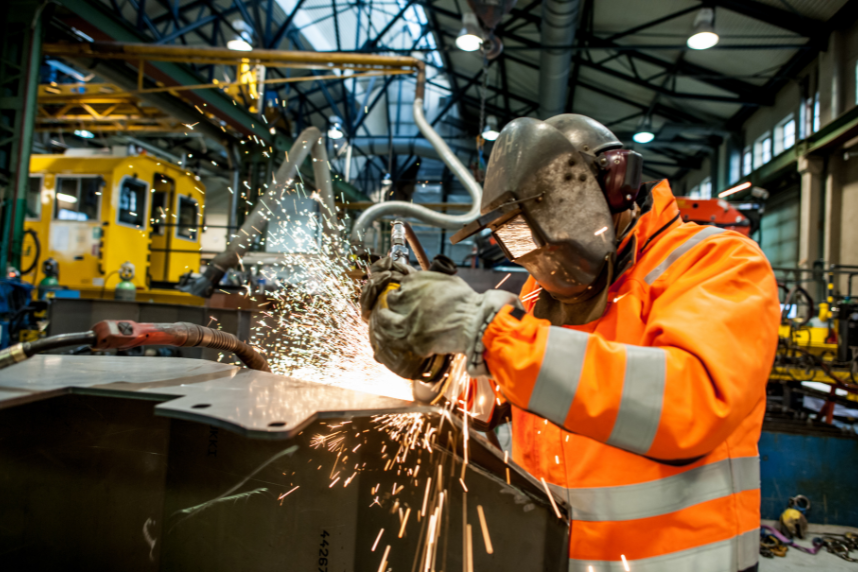
When trains and components need to be repaired, rebuilt, or inspected, extensive professional expertise underpins the work. Welding expertise involves far more than the weld itself. It encompasses materials, quality assurance, documentation, and safety. At Mantena, Ellen Solaas is one of the key people in this field.
As a welding engineer at Mantena Stange, Ellen has helped develop both the expertise and the professional environment over many years. She believes that modern welding is an area that many people outside the industry know too little about.
"Many people may think of welding solely as a craft, but it is also advanced technology. It is about understanding materials, processes, quality requirements, and how we ensure that the work meets the required standards," she says.
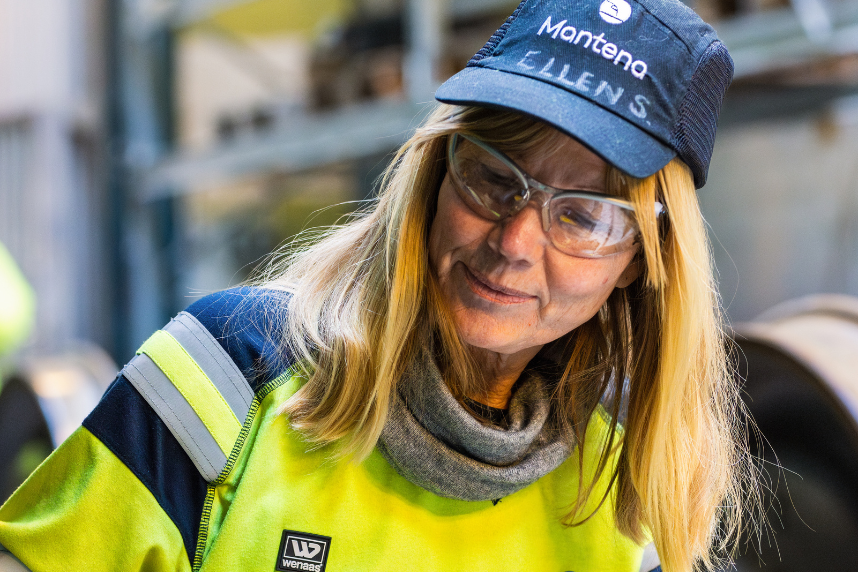
From Offshore to Railways
Before joining Mantena, Ellen worked with welder certification and projects within the mechanical engineering and offshore industries. As an International Welding Engineer, she gained experience from both Norwegian and international projects. When oil prices fell in 2016, a new opportunity emerged in the railway sector.
"I did not know much about the railway industry when I applied for the job, but that was exactly what made it exciting. It seemed like an industry with a lot of technology and complex systems. That sparked my curiosity."
In 2017, she joined Mantena as a Welding Engineer and NDT Level 3 inspector. Today, she is one of Mantena’s most important technical resources within welding technology, quality control, and project delivery.
"I enjoy working closely with production and solving practical challenges together with highly skilled professionals," says Ellen. "In addition, we are one of the few companies certified to carry out welding on railway rolling stock."
For customers, this means they can trust that the work is performed according to strict requirements for quality, traceability, and safety. For Mantena, these certifications open the door to projects that few other companies have the expertise and approvals to undertake.
"There are not many companies in Norway that combine welding engineering expertise, certified welders, and the necessary approvals for work on railway rolling stock. That is why I am incredibly proud to be part of this professional environment."
Quality Is No Coincidence
As a Welding Engineer and NDT Level 3 inspector, Ellen holds the highest certification level in Non-Destructive Testing (NDT). Her role includes overall technical responsibility, procedure approval, and mentoring other inspectors. NDT is used to assess the quality of materials and welds without causing damage. Methods may include ultrasonic testing, radiographic testing, and magnetic particle inspection.
"Welding expertise is about far more than the weld itself. It is about understanding the entire process, from material selection and welding methods to inspection and documentation. When everything works together, we produce high-quality products with a long service life."
For Ellen, the combination of practical experience and technical specialization is one of the most rewarding aspects of the profession.
"It is a field where theory and practice meet every single day."
A Strong Professional Environment
Over the years, Ellen has also played an important role in building the project organization at Stange, including through internal training programs and competence development initiatives.
She highlights the professional environment as one of Mantena’s greatest strengths.
"We have many highly skilled professionals with different backgrounds and areas of expertise. When welders, inspectors, engineers, and project teams work closely together, we achieve better solutions and higher quality."
According to Ellen, the need for specialized expertise will only continue to grow in the years ahead.
"Competence is perishable. We must continuously develop, share experiences, and ensure that new knowledge enters the organization. That is essential if we are to continue delivering quality to our customers."
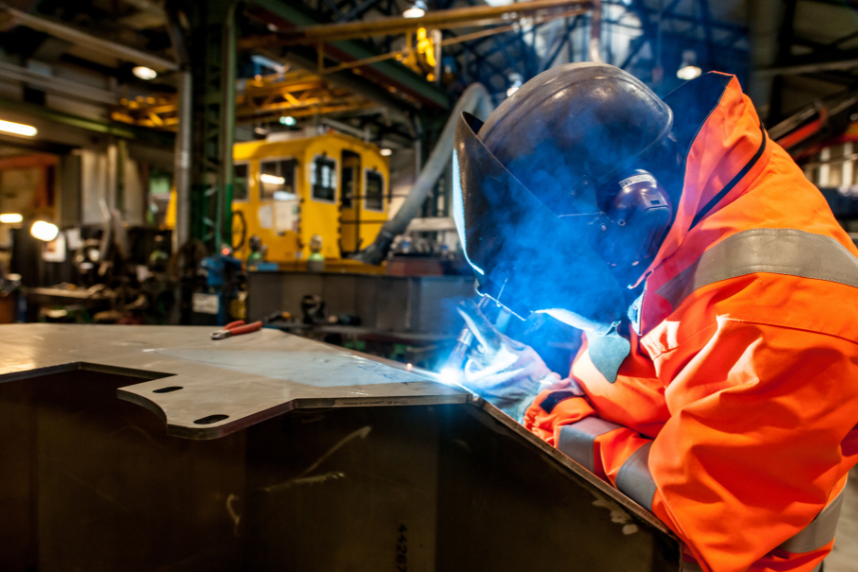
Great Opportunities in Technical Professions
Ellen hopes that more people will recognize the opportunities available in technical professions and in the railway industry.
"There are tremendous opportunities for personal and professional development. The industry is full of exciting technology, and you have the chance to influence its future development. That makes the job both challenging and highly motivating."
For Ellen, it is the combination of technical depth, practical challenges, and strong professional communities that continues to fuel her passion for the field.
"The best part is still working alongside people who care about quality and are committed to continuous improvement. That is how we achieve great results together."