
Risk Assessments on the Agenda
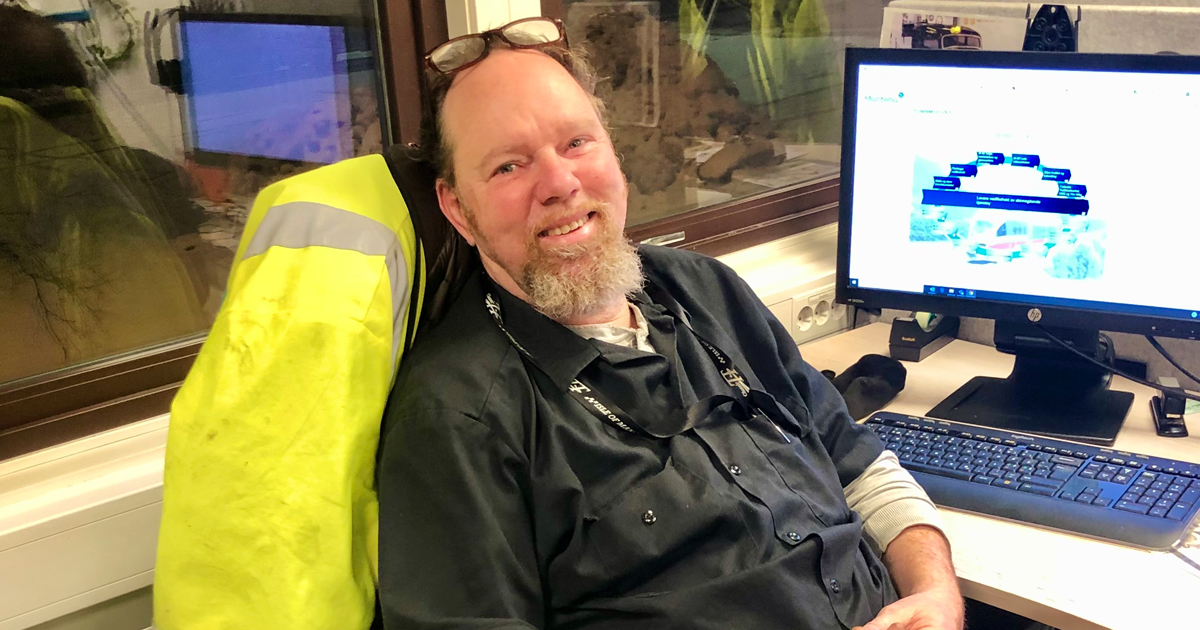
Tore Hanseth is a safety and quality advisor at Mantena. One of his responsibilities is to ensure that we consistently work in accordance with official laws and regulations, as well as current certifications and contract requirements.
Risk-Based Approach
Hanseth explains that the railway sector has a strong tradition of being process-oriented, meaning that work is primarily carried out according to procedures, instructions, and other relevant documentation for maintenance. The world is changing, and today more is expected from both machines and the people performing the work. There is a need to work faster and smarter, which also brings increased risk. In addition to changes in regulations and framework conditions, the sector has generally moved from solely process thinking to including a risk-based approach.
An important part of the work with safety and quality at Mantena is precisely to carry out thorough risk analyses and Safe Job Analyses (SJA). Hanseth views Safe Job Analyses as an additional checklist, demonstrating that all necessary assessments have been conducted.
– At all times we must consider every possible factor that may affect traffic safety. An SJA is intended to help us make sound judgments about whether the tasks we perform can influence safety. Our SJAs and risk analyses have many roles—they are meant, among other things, to reflect the maintenance of railway equipment, assist in notifying customers when necessary, and help ensure health, safety, and the environment. A key point is that our analyses are arranged in such a way that they support the follow-up of hazards or risks identified early on.
SJA and the Front Line
Having risk analyses as part of a management system is one thing, but according to Hanseth, the challenge is getting them used in everyday operations.
– Our risk analyses are intended to be more than just a tool for management. For us, it is important that every level from mechanics to technicians to management is proficient in using these tools. To secure ownership and implementation, we have developed a dedicated template for use. The SJAs cover eight main areas based on which field the risk assessment is to be carried out, ensuring the relevant areas are addressed. These points help us assess whether the maintenance work we perform may impact traffic safety and ensure consistency in our evaluations. Our SJAs are now used both by the front line and by a broadly composed team of mechanics, engineers, and people in other roles.
The Human Factor
Hanseth states that the human factor will only become more important in the future when it comes to risk assessments in the railway sector.
– With the changes that the railway sector is facing, we cannot avoid the human factor when considering limitations and why unwanted incidents occur. The human factor will therefore receive greater focus moving forward. A high level of risk management at every stage is crucial for ensuring quality deliveries and, not least, for preventing unwanted incidents.